

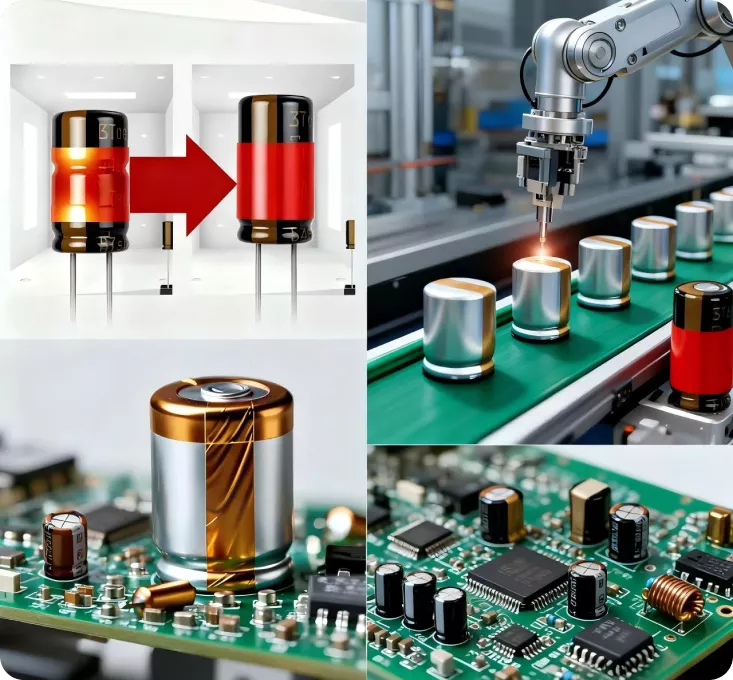
Our capacitive tapes deliver precise, reliable, high-temperature resistant solutions across electronics, automotive, and high-precision industries.
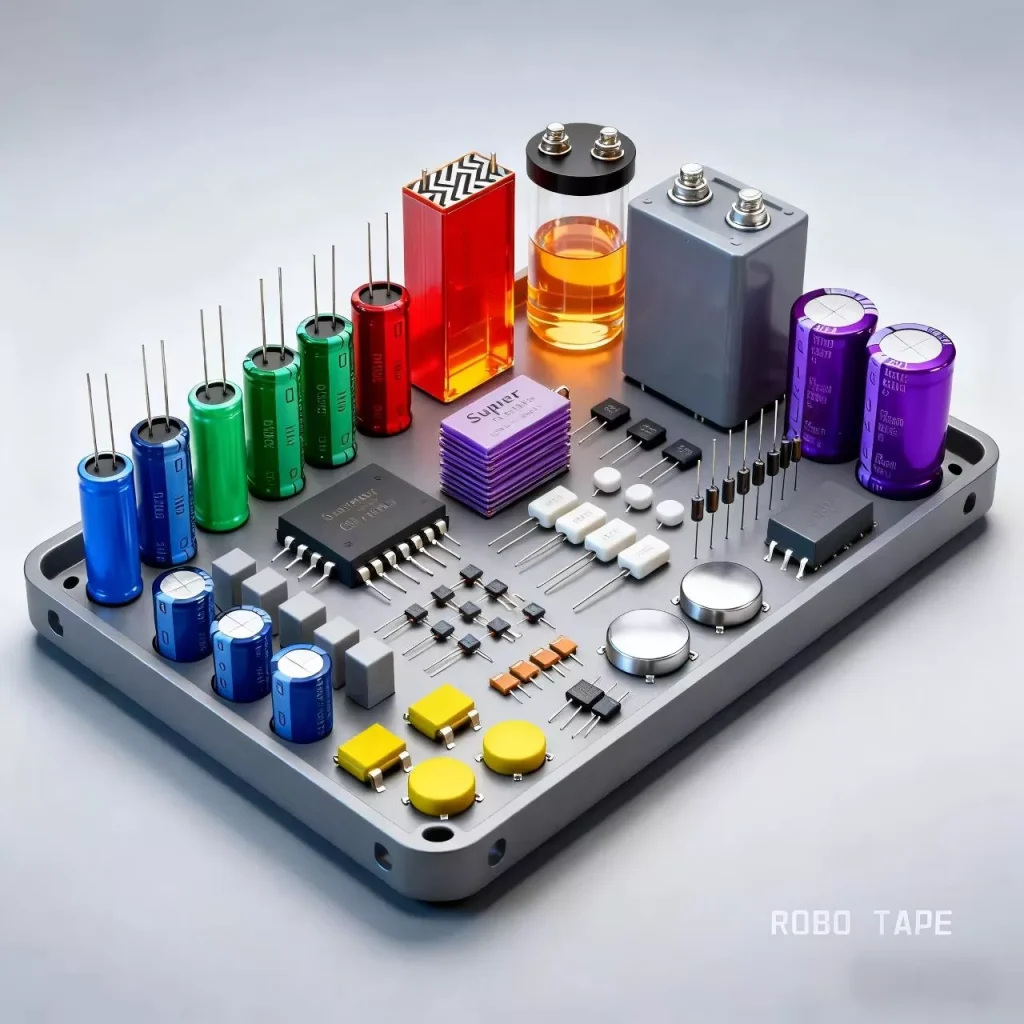
The capacitor industry integrates R&D, production, sales, and services, providing a key electronic component that stores and releases energy with functions such as AC conduction and DC blocking.
Key Benefits
High-temperature tape plays a crucial role in capacitor production, providing reliable insulation, fixation, and shielding to ensure product quality and safety.
Fixes electrode foils and diaphragms, preventing interlayer displacement.
Shields non-welding areas, avoiding solder slag damage.
Isolates the shell from the core, enhancing electrical safety.
Ensures stable performance throughout the manufacturing process.
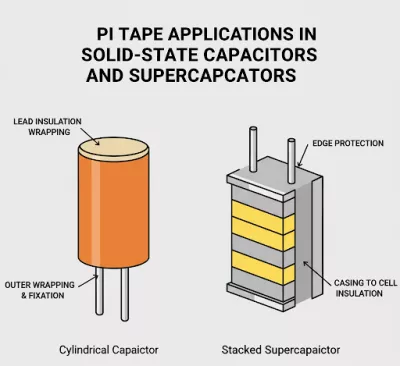
PI tape is mainly used in solid-state capacitors and supercapacitors for: insulation protection (of leads, plates, and casings), high-temperature process protection (during reflow soldering and welding), and fixation and mechanical reinforcement (for cell winding and module assembly). It is one of the key materials for ensuring the reliability and lifespan of capacitors
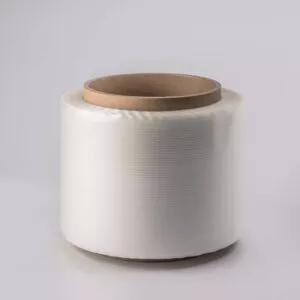
In aluminum electrolytic capacitors, polypropylene tapeis mainly used for:
Winding fixation (ensuring core stability)
Insulation protection (electrodes, casing, leads)
Module separation (multi-capacitor assemblies)
It is an indispensable insulating and fixing material in capacitor manufacturing.
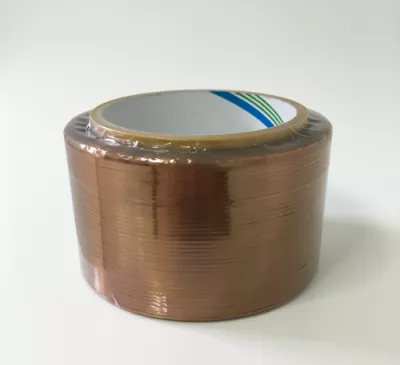
Why does the capacitor industry choose PI tape as the main functional electronic auxiliary material?
High temperature resistance: withstands short-term temperatures ≥260 °C, suitable for reflow soldering processes.
Excellent electrical insulation: high dielectric strength ensures safe operation of capacitors
Chemical resistance: resists the effects of electrolytes and solvents.
High mechanical strength: protects the structural stability of the capacitor.